U.S. Border Searches of Phones and Laptops Climb More Than 32% This Year
U.S. Customs and Border Protection searched 52,080 electronic devices in the first three quarters of its 2026 fiscal year, putting it on pace to top last year's record.
By News Media House Staff ·
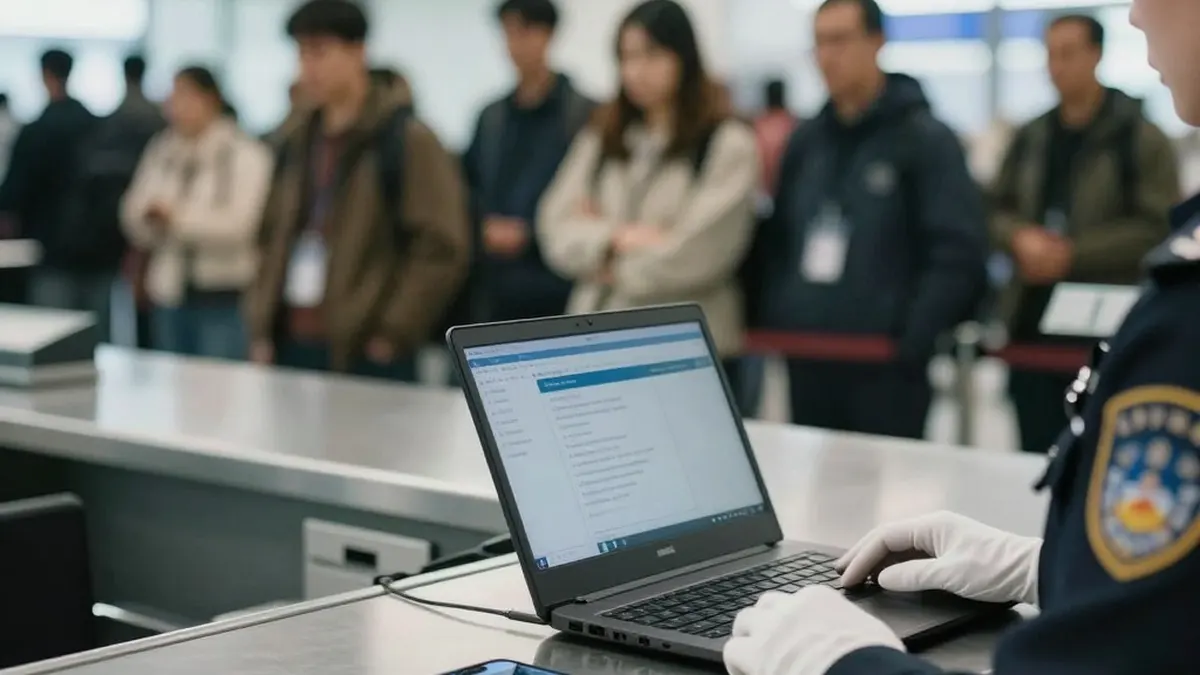
Searches of travellers' electronic devices by U.S. border officers have risen by more than 32 per cent this year and appear headed for a new record, according to U.S. Customs and Border Protection data obtained by CBC News.
The figures cover the first three quarters of CBP's 2026 fiscal year, from Oct. 1, 2025, to June 30, 2026. In that period, officers searched 52,080 devices, compared with 39,251 over the same stretch of the previous year. That is nearly as many as in all of fiscal 2025, when a record 55,424 devices were searched.
CBP says 47,517 of the 2026 searches were basic, which an officer can carry out without any reasonable suspicion of wrongdoing. Another 4,564 were advanced searches, which let an officer who has reasonable suspicion of unlawful activity or a national security concern analyze or copy a device's contents.
The agency declined to say how many searches happened at the Canadian border versus the Mexican border, or how they split between airports and land crossings. It also withheld the number of travellers who entered the country in that period and how many searches involved U.S. citizens versus non-citizens. Those details are generally included in its annual reports.
CBP public affairs officer Jessica Turner said that in 2025 the searches affected a small fraction of the 419 million travellers who entered the country. "CBP's border searches of electronic device numbers are consistent with increases since 2021, and year-over-year only 0.01 per cent of travellers have their devices searched," she wrote in an emailed response. She added that the searches aim to detect digital contraband, terrorism-related content and information relevant to admissibility.
Esha Bhandari, director of the American Civil Liberties Union's Speech, Privacy and Technology Project, said the rise calls for more congressional oversight and accountability. "It's hard to speculate on the reasons for the increase because the government doesn't explain it," she said. In her view, when the government holds a power, it tends to use it "to the detriment of travellers' privacy." She said the aggregate data makes it hard to understand what is happening, and that the anecdotes her group hears are "certainly troubling," including travellers being asked about political opinions, writing or religious practice.
In January, CBP updated its guidelines to state that device searches cover items such as flash drives, SIM cards, GPS systems, unmanned aircraft systems, vehicle infotainment systems and smart watches. The update also added smuggling of narcotics, firearms or other goods, transnational theft of proprietary information and digital contraband to the crimes the searches are meant to detect. Bhandari said the changes altered only "a few procedures at the margins," and suggested the increase may reflect advances in technology and the failure of federal courts to limit the government's authority.
Laura Dawson, executive director of the Future Borders Coalition, said the increase is hard to judge without knowing where the searches occurred and how many people crossed. She noted that searches also take place at seaports and airports, and that the World Cup this summer may have brought a more diverse mix of visitors. She also pointed to greater focus on border security and closer co-operation between Canadian and U.S. border services, including on human smuggling and the Ryan Wedding case. "Having more scrutiny at the border is actually a positive in many ways," she said.
Dawson said device searches remain rare despite alarming stories on social media. By her figures, one in 9,000 crossings leads to a U.S. inspection, and one in 14,000 crossings leads to a search on the Canadian side. Canadian officials have searched a much smaller share of devices than their U.S. counterparts in recent years, and the numbers have been falling. The Canada Border Services Agency says its 2026 statistics are not yet available.
Originally published by News Media House · Source: CBC News