Tesla Sets Q2 2027 Target for Unsupervised Driving, But Only in Limited Zones
Tesla’s AI chief clarified that the new self-driving milestone applies to vehicles integrated into the company's Robotaxi network, not a universal software feature for all owners.
By Rahul Mehta ·
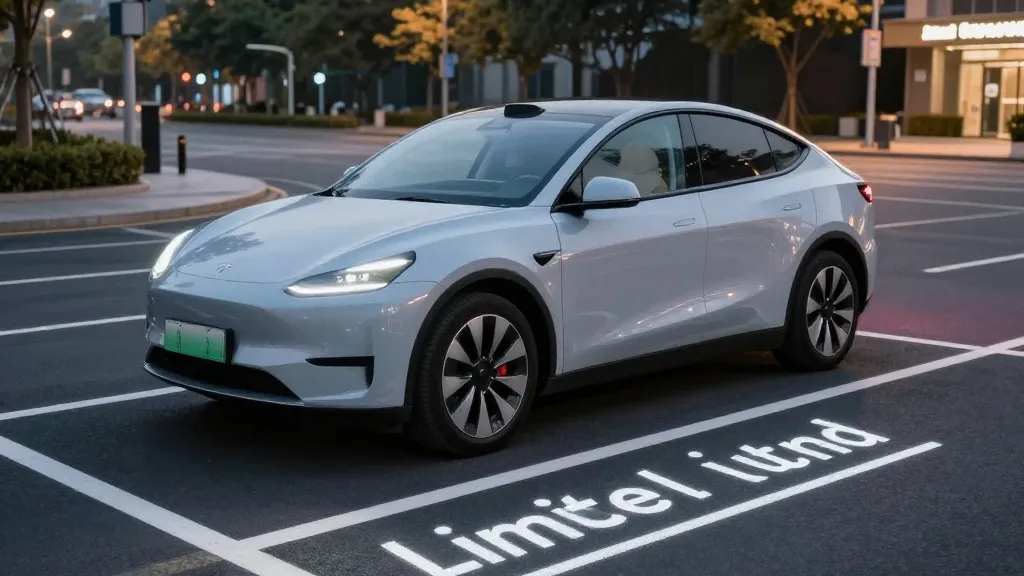
The gap between consumer expectations and corporate reality widened on October 21, 2026, when Tesla formally scheduled unsupervised Full Self-Driving for customer-owned vehicles for the second quarter of 2027. While this provides a concrete date for a feature promised for nearly a decade, the announcement carries a significant caveat that redefines the product for millions of buyers. The new timeline does not represent a blanket software update for all Tesla models; instead, it marks the integration of private vehicles into Tesla’s managed Robotaxi fleet.
The first key point is the specific operational model described by Ashok Elluswamy, Tesla’s AI chief, during the Q3 2026 earnings call. Elluswamy explained that unsupervised driving will initially function by allowing owners to add their cars to the existing Robotaxi network. This means the vehicle operates under Tesla’s direct management and protocols rather than serving as an independent, autonomous taxi for the owner’s personal use. The distinction is critical: the car is joining a corporate fleet, not gaining a universal capability to drive the owner anywhere.
The second key point concerns the geographic limitations of this service. Tesla’s Robotaxi operations currently cover only six U.S. metropolitan areas, and within those cities, the service areas are restricted to small geofenced slices. For example, in Miami, the operational zone is largely confined to West Miami and a narrow strip extending toward Doral and Sweetwater. Similar small geofences were launched in Orlando and Tampa in July 2026. Outside of these specific zones, unsupervised driving is not yet available to customer cars.
The third key point highlights the operational constraints within those zones. The Robotaxi service primarily utilizes low-speed routes and largely avoids highways and complex urban environments. A notable exception is the Bay Area, where the service is not fully unsupervised due to California regulations. Tesla maintains a safety driver in every vehicle in that region because it has not yet released the required data to the California DMV for operation beyond a Level 2 autonomous system. This regulatory hurdle remains a bottleneck for broader unsupervised deployment.
Contextualizing the progress, Tesla reported that its Robotaxi service accumulated nearly two million unsupervised miles by the end of the third quarter. This milestone was reached one month after the Cybercab model joined the Austin fleet. However, third-party tracking data from the spring indicated that the number of fully driverless Teslas on the road remained in the dozens. This figure stands in contrast to the hundreds of thousands of vehicles Elon Musk had previously discussed, and it lags behind competitors like Waymo, which already operates in Orlando and Tampa with over three million miles logged.
The outlook suggests a significant shift from the original sales pitch. For years, Tesla marketed FSD as a software update that would eventually allow the car to drive itself anywhere. In July 2025, Musk stated that unsupervised FSD would be available for personal use in certain geographies by the end of that year. A year prior, he expressed confidence that unsupervised self-driving would be achieved within the following year. Now, the target is Q2 2027, and the product is narrower in scope: the car works as a Robotaxi within Tesla-controlled zones on Tesla’s terms. Owners with Hardware 3 have already been informed that their computers cannot run unsupervised FSD, with no clear upgrade path provided.
Elluswamy reiterated that safety remains the primary bottleneck for expansion, which is why Tesla limits operations to low-speed roads and avoids harder environments. He speculated that these safety issues could be resolved by next year but admitted uncertainty regarding the exact timeline. For buyers in the Great Lakes and Ohio Valley regions, this means that unless they reside within one of the six active metro zones, unsupervised driving will not impact their daily commute. The promise has evolved from a universal driving capability to a fleet-based service with strict geographic and operational boundaries.
Source: Electrek